Thursday, 18 December 2014

BBFC

What might you see in a 15 rated film?

  • Strong violence
  • Frequent strong language
  • Portrayals of sexual activity
  • Strong verbal references to sex
  • Sexual nudity
  • Brief scenes of sexual violence or verbal references to sexual violence
  • Discriminatory language or behaviour
  • Drug taking
Our thriller opening will not include much strong language, if any, and there will not be any portrayals of sexual activity. However, there will be some strong violence and fear portrayed. I feel like our opening could be classes as a 12 but due to the theme and nature of the rest of the film it will have to be rated a 15.

How this will help me to create my thriller opening:

This research has helped me to understand what I am allowed in a 15 rated film and if this will be appropriate for our opening. It has allowed me to set boundaries in terms of what we will include.


Wednesday, 17 December 2014

Editing

·        Must show in exam: how editing helps to aid meaning, varied shot transitions
·         The physical joining together of the shots, known as montage.
·         This term is used because it suggests the creation of meaning
·         How long does each shot last?
·         How’s each shot joined to the next?
·         The most common technique is the cut:
o   A sudden change of shot from one viewpoint or location to another
o   There is always a reason for the cut
·         Matched cut:
o   A cut in which a familiar relationship between shots make the change seem ‘smooth’.
·         Jump cut:
o   An abrupt switch from one scene to another, used to make a dramatic point.
·         Motivated cut:
o   A cut used to show the viewer something not immediately visible
o   This is most commonly used for changes of speaker and known as shot/reverse shot.
·         Cross-cut:
o   A cut from one narrative or line of action to another
·         Cutaway:
o   A ‘bridging’ shot between two shots of the same subject; often used to soften uncomfortable jumps in time or space.
·         Match on action:
o   A cut in which two parallel actions are mirrored in order to suggest a strong relationship between two scenes.
·         Reaction shot:
o   Any shot in which a participant reacts to events/action. Often used to guide the audience’s reaction to a scene.
·         Fade shots:
o   A transition to or from a blank screen (usually black).
·          Dissolve shots:
o   A slow transition as one image merges into another.
·         Both are used to suggest differences in time or place. Dissolve shot can suggest a strong connection.
·         Most films use continuity editing
o   Makes the action as fluid as possible so we are not aware of the construction process
·         The speed of editing determines the pace and mood.
·         Tense=quick editing.

·         Relaxed=slow (less frequent) editing. 

Lighting and sound

·        Mise-en-scene (in the picture, setting)- creates mood and atmosphere
o   Props
o   Lighting
o   Costume
·        Lighting helps convey mood
·        Audience can be directed with bright lighting
Consider when analysing:
·        What’s illuminated/in the shadows
·        Hard (bold shadows) or soft (diffused illumination) lighting?
·        Direction of light
·        High contrast lighting or symbolic
3 point lighting:
·         Key light- brightest main light
·         Back light- balances the light
·         Filler light- softens shadows

·         Under lighting- main source of light comes from blow the subject. Tends to distort and is often used in horror films.

·         Top lighting- main source of light comes from above, highlights the features of a character. Often used to create a glamorous look.

·         Back lighting- light source behind the subject. If used with no other lighting then silhouettes are created.

Sound
·         Most sound is added in post-production
·         Creates atmosphere
·         Adds realism
·         Emphasise a characters actions
·         Draws attention to a particular event, place or object
·         Diegetic sound- sounds and music which come from within the world of film (conversations, typing etc)
·         Non-diegetic- sound that is put in during post production and does not originate from the world of the film.
·         Selective sound- to emphasise key sound elements within a sequence
·         Ambient sound- to create a particular atmosphere or a sense of place
·         Film sound can either be:
o   Synchronous- caused by some event on screen so that sound matched the action.
o   Asynchronous- separate from the visuals, such as voiceover or dialogue from another scene.
o   Parallel sound- the sound you hear complements the image you see
o   Contrapuntal sound- the sound does not fit what we see. Sometimes done to create a more dramatic effect.
·         Sound bridges- the use of sounds to help transitions between sequences pass more fluidly.
·         Sound effects- these are used to create a sense of realism or to create some psychological impact or effect.

·         Music- creates atmosphere to link shots or sequences


·         Silence- used to provoke a reaction from the audience

Film techniques of Alfred Hitchcock

Everything is designed in mind of the audience:

  • Hitchcock knew that people went to the cinemas to have fin, the more fun they'll have, the quicker they will come back.

Frame for emotion

  • Wide shot has less emotion
  • Closer image means more emotion
  • Emotion is the ultimate goal in each scene, emotion comes directly from the actor's eyes

The camera is not a camera

  • Hitchcock's camera moves around just like a person's eyes
  • Allows the audience to feel like they are involved in uncovering the story
  • This is used more in silent films

Dialogue means nothing

  • "People don't always express their inner thoughts to one another, a conversation may be quite trivial, but often the eyes will reveal what a person thinks or needs" Alfred Hitchcock

Point of view editing

  • Start with a close up of the actor
  • Cut to a shot of what they're seeing
  • Cut back to the actor to see their reaction
  • Repeat as desired

Montage gives you control

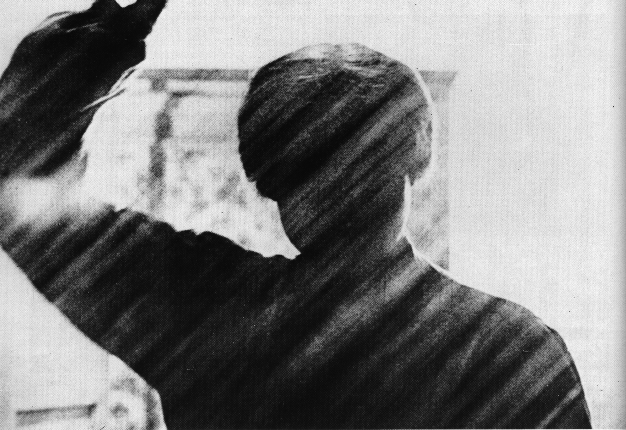
  • The famous shower scene from 'Psycho' uses montage to hide the violence. You never see the knife hitting Janet Leigh.

How this will help me to create my thriller opening:

Alfred Hitchcock is one of the most famous directors of all time and helped to shape the thriller genre. This means that from this research I know what worked well all those years ago and is still being used in thrillers today. I know have a better idea of what conventions and techniques will work in my horror-thriller.

Tuesday, 2 December 2014

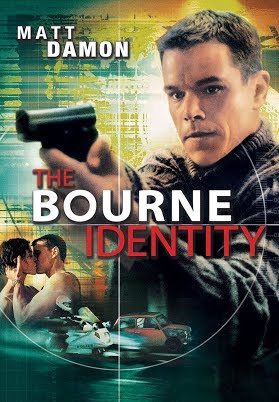
Non-verbal communication and opening credits analysis of the opening of 'The Bourne Identity'

The first example of non-verbal communication shown in the film 'The Bourne Identity' is when you see the sailors playing cards on the boat. All of the sailors are playing a game of cards while looking happy and smiling, hence setting a cheerful and relaxed setting. This is soon juxtaposed with one sailor in particular as he looks out across the sea and sees a body floating. His facial expressions show that he is confused, scared and worried. Therefore, making the audience feel tension as the mood has suddenly dramatically changed. Once they have pulled the body out of the water and realise that he is still alive one person on board starts to remove the bullets from his back. As he is doing this he does not speak at all, he mainly shows focus through his facial expression. Shortly after he cuts out a bullet shaped micro chip like laser. As he does this he shows confusion and surprise, this makes the audience feel tense and inquisitive as they want to know what it is that he has pulled out of the mysterious' man's back.

The opening credits to 'The Bourne Legacy' appear just after one of the sailors sees the body floating in the sea. The credits fade in from a side view of the body floating, they fade in onto a completely black background. The fact that the titles appear after an image of the body might suggest that the body is linked with the main plot of the film or is the main theme. The titles are in block capitals which could suggest authority within the film or that it is quite a serious film. The black and white used could also suggest a serious theme/plot.


How this will help me to create my thriller:

Watching 'The Bourne Identity' and writing this has allowed me to find out more about the importance of credits, music and non-verbal communication. This means I know now more about what my opening credits and how important the use of sound and music will be in my opening.

Thursday, 27 November 2014

Thriller treatment

Flashback to 1996- tells the story of how the woods are haunted.
Dusk: Two young teenage girls go into the woods as a shortcut to get home. Ellen is a horror enthusiast and Freya is scared of all horror/ghost stories. Ellen convinces Freya to go through the woods.
As they are walking they start to hear noises and they both run in different directions. Ellen comes across a young girl sitting on a bench, she then realises this is not a girl and in fact a demon/possessed girl as her eyes are entirely white.
Camera cuts away to Freya as she hears the screams of Ellen followed by the sound of a something large being dropped into a pond, Freya runs and sees the demon girl. Camera cuts to a shot of the wood floor, screams are heard and one of Freya’s shoes with blood on lands in front of the camera.
Opening titles roll
Back to modern day
A group of 5 teenagers (girls and boys) show a fascination towards the stories of the demon in the woods and decide to see for themselves if they’re true.
The teenagers decide to do a campout in the woods and joke about seeing if they can survive the night.
Weird things (noises, movements in the bushes etc) start to happen as early as they are setting up camp and one of the teens wants to leave but they persuade him/her to stay.
As they start jokingly telling each other ghost stories and urban myths about the woods, some true some not, one of the teens shares a book with the group that tells you how to summon demons. All but one of the teens thinks it is a good idea to perform the ‘spell’ as all the stories about the woods are just ‘silly ghost stories’.
At first nothing happens, until two of the teens have an argument and one of them walks off. They come across a young girl sitting on the bench, just like the flashback showed, the same thing as in 1996 happens (she is thrown into the pond).
The rest of the group start to wonder where the other teen is and decide to as a group go in search for him/her.
As they are walking they start to hear noises and they think it is the other teen and they have been hurt or are in some kind of trouble. One of the teens gets left behind because they go to tie their shoelaces.
This pattern follows with one of the teens getting left behind for some reason. Each of the teens gets killed/possessed in one of the ways in which the stories they previously told. Once the demons are summoned they will not go back to rest until they have completed the pattern.
The film follows the teens as they try to find a way to escape the pattern and to put the demons at rest for good.
The film ends as the final teen is killed. The camera shows a close up of their face while zooming out to show their entire body until they suddenly open their eyes, which are entirely white just like the young demon girls were.

Credits

How this will help me to create my thriller opening:

Writing this thriller treatment has allowed me to gain knowledge of what the whole film would be like if it was made. This means I will know how much to give away in the opening and what I am ultimately aiming for.

Wednesday, 26 November 2014

How does Hitchcock build tension in ‘Psycho’?

In the 1960 film ‘Psycho’, director Alfred Hitchcock builds tension throughout using a variety of mediums. As the first clear cut thriller within film history, ‘Psycho’ is in fact the film which set the classic conventions of the genre so, as expected, has all of them. The action takes place in a lonely out of the way location in the middle of nowhere. It’s far from the city in a quiet area where nobody would hear anything suspicious because you don’t have many neighbours and the ones there are live far off.

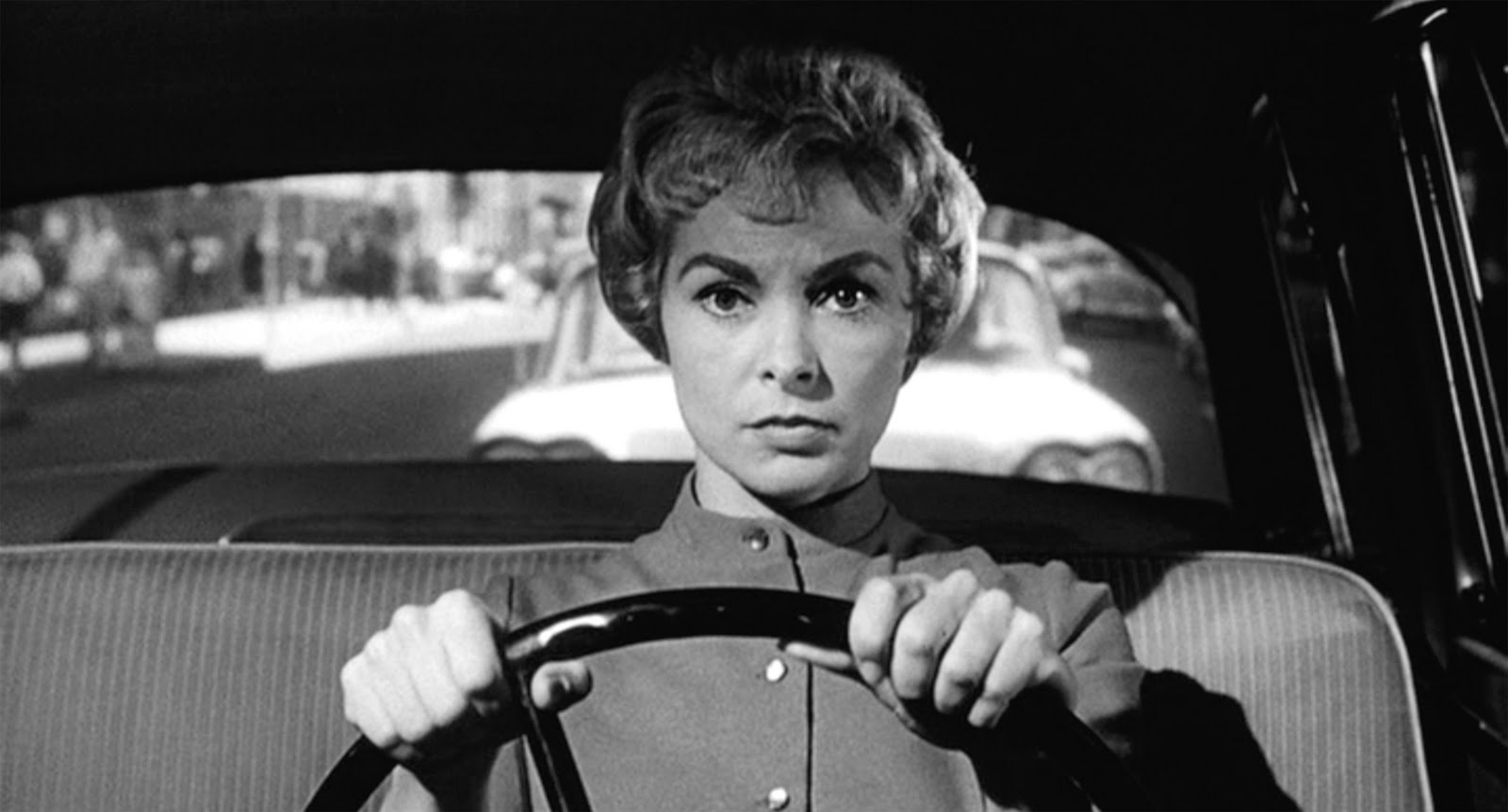
One way that Hitchcock builds tension is through the use of camera angles. At the beginning of the film there is one long panning of the establishing shot with no cuts- then a very sudden cut with a jerking movement. This lulls the reader into a false sense of security expecting further panning then ripping them away to a new sight. This could be reflecting the state of Norman Bates’ mind. As the camera is scanning across the city, the window that it chooses feels quite random, as if it is choosing a victim. Again making the audience feel uncomfortable as it is if they are being placed in Bates’ mind. Another camera angle that I thought helped to create tension was when Marion Crane was driving in the storm. A point of view shot was used which make the audience feel as if they were in the car driving, creating a sense of fear and building tension.

Furthermore, Hitchcock builds tension through the use of sound. The music played in the opening sequence is very dramatic, the string instruments being played at a very fast pace. It is dark, discordant and full of tension, giving the feeling that time is running out and you are being chased. Even the music seems to have no idea of where its going, sharply plucked high pitch strings one moment and then a very low pitch the next. It is wild and unpredictable. Also the use of the dramatic music played whenever we see Norman Bates suggests to the audience that he isn't one of the good guys he presents himself as, helping to build tension as the audience don't know what he is actually going to do.

Additionally, Hitchcock uses the use of titles to build tension in ‘Psycho’. In the opening titles a date is displayed which has no year; suggesting to the audience that the film can still feel very relevant, as if the events within it could happen at any time and place. The time is written in words, and makes it seem like a police file within the aftermath of a crime. This contradicts with the effect of the date missing the year, marking when everything happened precisely. This could lead to the audience becoming confused as they are not sure when exactly this happened, building tension as they do not know when anything will be happening further on in the film. When the opening credits roll the screen and text is at random being split into bars, they are moving around constantly. Even the bars are unstable, sometimes splitting sideways and other times vertically. This reflects the dual nature of Norman Bates, hinting at the later revelation of his split personality.

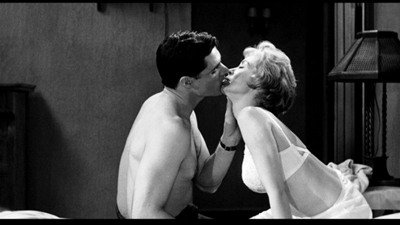
Lastly, Hitchcock uses Mise-en-Scene to build tension. In the opening shot Marion looks passive and is lying down on the bed, foreshadowing her fate. At first when we see her she is dressed in white which suggest innocence to the audience. In a later scene this changes and we see that she is wearing black underwear when she is getting dressed to leave with the money that she stole. This helps to build tension as black suggests death and danger. Once again whilst Norman Bates is watching her through the peephole, she is wearing black underwear again; she is a doomed woman. His watching through the peephole also reflects the beginning of the movie where the audience ‘secretly’ watched Marion through a window in her underwear, hinting that Norman is the killer.

In conclusion, Alfred Hitchcock successfully uses a wide variety of mediums to build tension throughout the film ‘Psycho’.  In my opinion, I believe Hitchcock was excellent at creating tension especially through the use of the dramatic music that is played at times of suspense throughout the film. I think that since the film was in black and white it made it seem darker, scarier and creepy.