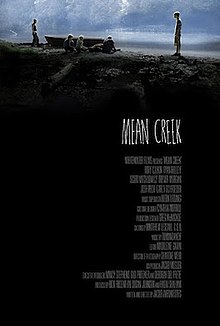
 In the 2004 American independent drama film 'Mean Creek', director Jacob Aaron Estes uses a variety of mediums to build tension and suspense throughout the film. As a drama film with elements of a thriller, 'Mean Creek' uses lots of point of view camera angle and uses the use of silence at times of suspense. The film builds tension right from the start when George is first portrayed as a 'bully' when he beats up Sam in the opening scene. From the beginning the audience know that something disastrous is going to happen, whether it is to Sam or George.
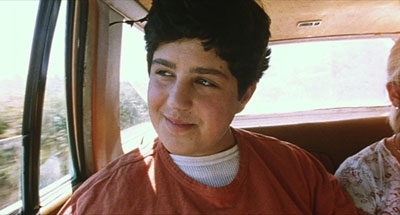 One way that Estes
creates a sense of tension is through the use of camera angles. The film uses
many close up shots of characters to show emotion, which also helps the
audience feel sympathy towards them. When George becomes part of the
main action in the film (about half way through) his handheld camera is used to
show some point of view camera angles. The POV angles help the audience to feel
closer to the action; also we get to see what it is like as George falls into
the river, again making the audience feel sympathy and a sense of fear. There
was a very high angle shot of the group of teenagers standing around George’s
body, showing how alone and vulnerable they were. It was similar to when Sam
was lying on the ground with other children standing over him, and even though
this time, he was the one standing over someone else’s body, it still seemed as
if he was completely powerless in the situation due to the high angle shot.
One way that Estes
creates a sense of tension is through the use of camera angles. The film uses
many close up shots of characters to show emotion, which also helps the
audience feel sympathy towards them. When George becomes part of the
main action in the film (about half way through) his handheld camera is used to
show some point of view camera angles. The POV angles help the audience to feel
closer to the action; also we get to see what it is like as George falls into
the river, again making the audience feel sympathy and a sense of fear. There
was a very high angle shot of the group of teenagers standing around George’s
body, showing how alone and vulnerable they were. It was similar to when Sam
was lying on the ground with other children standing over him, and even though
this time, he was the one standing over someone else’s body, it still seemed as
if he was completely powerless in the situation due to the high angle shot. Furthermore, Este creates a sense of fear and suspense
through the use of camera movement. Lots of slow camera movement is used
throughout the film which helps to create a sense of fear as the audience have
longer to think about what is going to happen next. After George’s dead body
was dragged to shore, the camera moved slowly from one scene to the next in one
continuous movement, rather than flashing quickly from one event to the next
like when Rocky was in the water and the rest of the group were rowing to
shore. This slow camera movement shows that there is not much
action taking place which could suggest that there is nothing more that can be
done to bring George back to life. When George uses his handheld camera there
is very jolty and jerky movements of the camera which again brings the audience
closer to the action and gives a sense of real life.
Furthermore, Este creates a sense of fear and suspense
through the use of camera movement. Lots of slow camera movement is used
throughout the film which helps to create a sense of fear as the audience have
longer to think about what is going to happen next. After George’s dead body
was dragged to shore, the camera moved slowly from one scene to the next in one
continuous movement, rather than flashing quickly from one event to the next
like when Rocky was in the water and the rest of the group were rowing to
shore. This slow camera movement shows that there is not much
action taking place which could suggest that there is nothing more that can be
done to bring George back to life. When George uses his handheld camera there
is very jolty and jerky movements of the camera which again brings the audience
closer to the action and gives a sense of real life.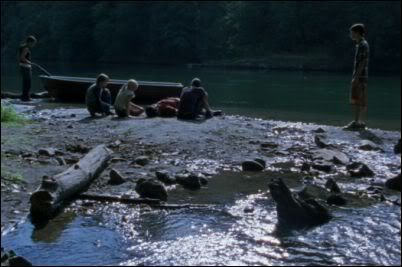 Additionally, Estes creates a sense of unease through
the use of sound and music (Link to music). When the children/teenagers first come to the
conclusion that George is dead there is a very calm atmosphere and sad
melancholy music is played. I feel like this music and lack of action gives a
lets the tension lower as there is no longer a sense of an unknown conclusion.
This tension is replaced by sympathy and sadness. On the other hand, the use of
silence in this scene builds tension as the audience is more in the dark about
what has happened as no one is talking about it. The lack of sounds makes the
reality of George’s death and magnitude of their problems obvious. As the police
are digging up George’s body, George voiceovers with a speech that he had said
to his camera previously about people not understanding him. This makes the
audience feel even more sadness towards his death as they now know that he was
just a misunderstood boy who only wanted to fit in and make friends.
Additionally, Estes creates a sense of unease through
the use of sound and music (Link to music). When the children/teenagers first come to the
conclusion that George is dead there is a very calm atmosphere and sad
melancholy music is played. I feel like this music and lack of action gives a
lets the tension lower as there is no longer a sense of an unknown conclusion.
This tension is replaced by sympathy and sadness. On the other hand, the use of
silence in this scene builds tension as the audience is more in the dark about
what has happened as no one is talking about it. The lack of sounds makes the
reality of George’s death and magnitude of their problems obvious. As the police
are digging up George’s body, George voiceovers with a speech that he had said
to his camera previously about people not understanding him. This makes the
audience feel even more sadness towards his death as they now know that he was
just a misunderstood boy who only wanted to fit in and make friends. Lastly, Estes builds tension through the use of
mise-en-scene and the use of titles/credits. In the opening credits/titles an
underwater scene is shown which foreshadows the foreseeable events later in the
film. These credits give an eerie atmosphere and fear of the unknown. Later on
when they are first on the boat there is a relaxed and calm setting which
distracts the audience from what is about to happen and makes them think that
maybe this boat trip might turn out peaceful. However, the audience may think
that the setting is too peaceful and may sense that something bad is destined
to happen. Also, the setting on the boat is very isolated meaning that the
children are alone and have no access to help if something happens, making them
very vulnerable. This gives off a sense of fear to the audience. After George’s
death Millie stabs a snail that is next to the word ‘snap!’ that has been
engraved into a rock. This shows a release of anger and a reflection of how
Millie feels.
Lastly, Estes builds tension through the use of
mise-en-scene and the use of titles/credits. In the opening credits/titles an
underwater scene is shown which foreshadows the foreseeable events later in the
film. These credits give an eerie atmosphere and fear of the unknown. Later on
when they are first on the boat there is a relaxed and calm setting which
distracts the audience from what is about to happen and makes them think that
maybe this boat trip might turn out peaceful. However, the audience may think
that the setting is too peaceful and may sense that something bad is destined
to happen. Also, the setting on the boat is very isolated meaning that the
children are alone and have no access to help if something happens, making them
very vulnerable. This gives off a sense of fear to the audience. After George’s
death Millie stabs a snail that is next to the word ‘snap!’ that has been
engraved into a rock. This shows a release of anger and a reflection of how
Millie feels. In conclusion, Jacob Aaron Estes Successfully builds tension and suspense and a sense of fear and unease through the use of many mediums throughout the film 'Mean Creek'. In my opinion, I believe that Estes was extremely successful in creating a sense of tension especially in the use of silence and the use of POV camera angles from George's handheld camera.
How this will help me to make my thriller opening:
This textual analysis and this film has shown me what works well in drama thrillers and what is commonly used. This will give me some ideas on what to include in my thriller opening and, if I decide to create a drama thriller, what conventions are commonly used.

No comments:
Post a Comment